Which humanoid robot do you need? From educational kits to professional robotics
From small programmable robots to life-size humanoids. Discover what each one can help you explore.
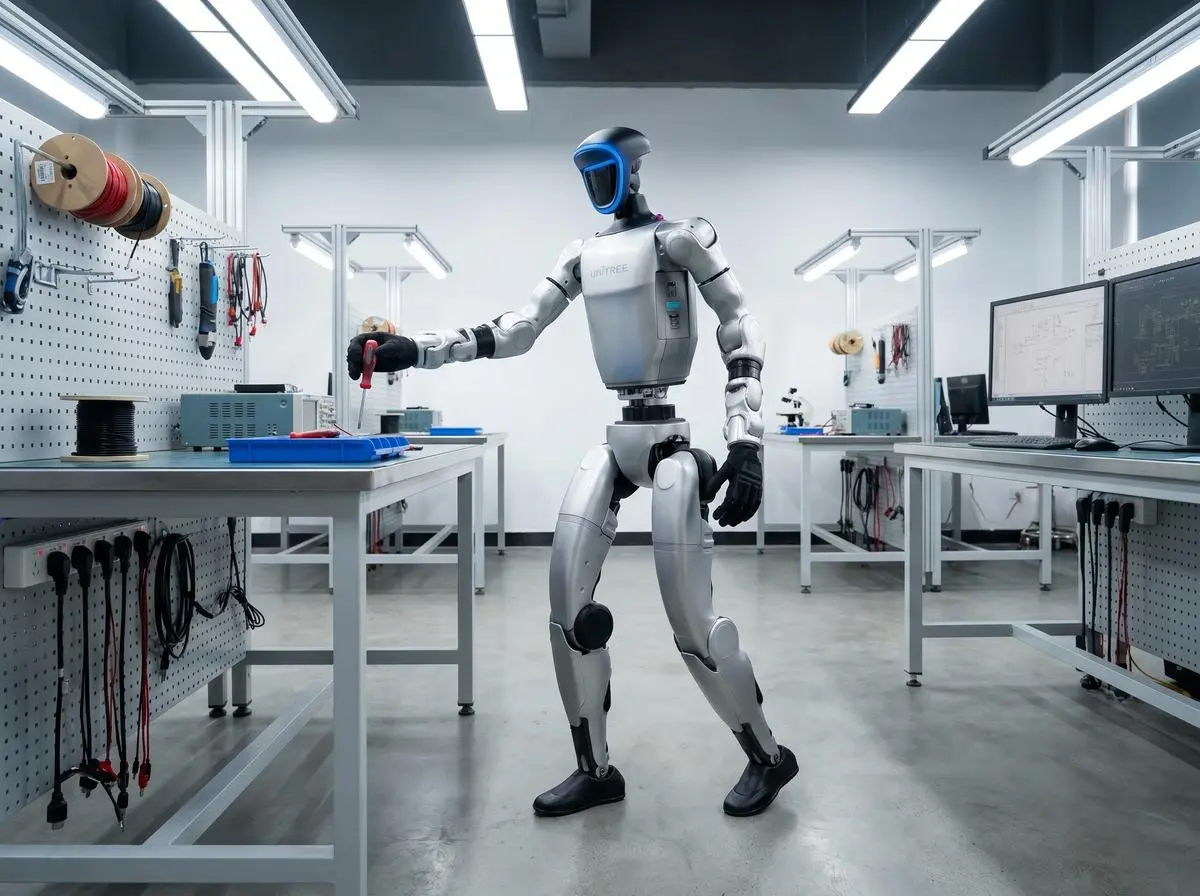
Do you want to program your first humanoid, study how robots walk or experiment with artificial intelligence on a human-size machine? Humanoid robots now exist for different budgets and goals. Some fit on a table; others stand nearly two meters tall and need specialized teams to make the most of their capabilities.
But one point matters: a robot that can walk, talk or move its arms does not necessarily know how to perform tasks autonomously. The key is deciding what you want to do with it and how much development you are prepared to undertake.
1. Do you want to program your first humanoid robot?
What you need: an educational humanoid with programmable movements.
You do not need to start with a human-size machine. A small biped lets you learn how joints coordinate, how balance is maintained and how motion sequences are programmed.
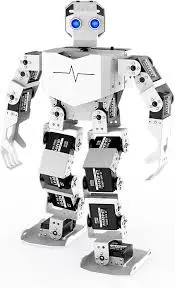
Hiwonder Tonybot Arduino 17DOF
- Biped robot with 17 degrees of freedom in the advertised configuration.
- Compatible with Arduino, Scratch and Python programming, depending on the version.
- Lets you experiment with walking, turns and motion sequences.
Note: It is not an autonomous assistant. Vision, voice and artificial-intelligence functions depend on the modules and version purchased.
View Hiwonder Tonybot Arduino 17DOF →2. Do you want to experiment with computer vision and voice interaction?
What you need: a humanoid with a camera and programmable computer.
Recognizing colors, tracking objects or responding to instructions requires more than motors. You need sensors and a system able to process the information it receives.
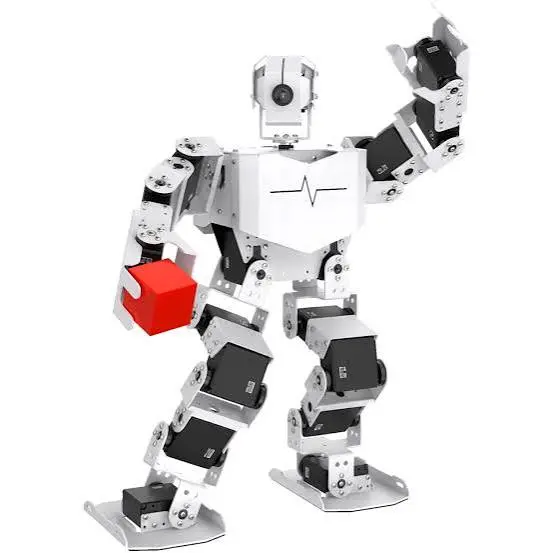
Hiwonder TonyPi Pro
- Raspberry Pi-based humanoid platform.
- Python programming and computer-vision projects through OpenCV.
- Camera for visual recognition and tracking.
- Voice-interaction and AI functions, depending on configuration.
Note: Check which Raspberry Pi version, accessories and AI modules are included in the offer. Advanced functions can require external services and additional setup.
View Hiwonder TonyPi Pro →3. Do you want to take part in humanoid-robotics competitions?
What you need: a biped built for dynamic movement and competitive development.
Robot football and mobility challenges require visual perception, balance, coordination and quick decisions.
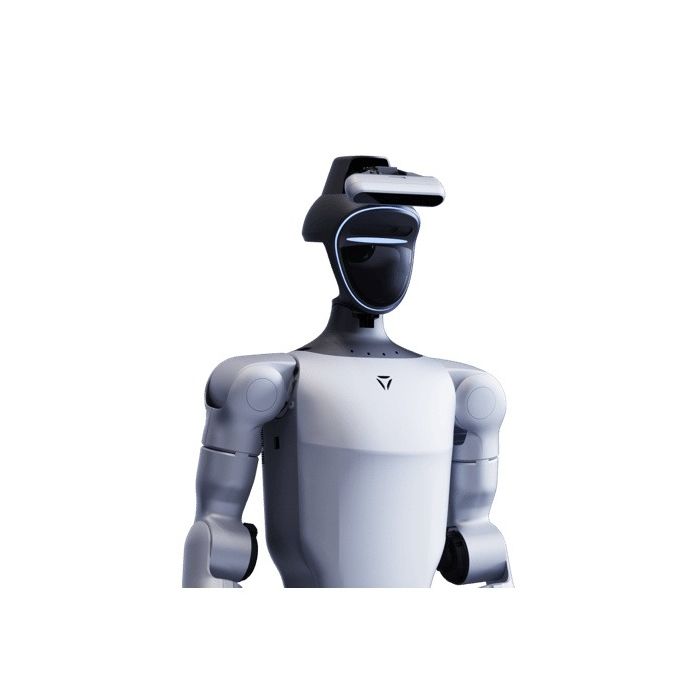
Unitree G1 Competition Humanoid Robot
- Humanoid standing about 1.3 meters tall.
- Platform aimed at robot-football competitions.
- SDK with vision, positioning and control tools.
- Compatible with training and simulation workflows for developing movements.
Note: Buying the robot is not enough to compete. You will need to program strategies, train behaviors and meet the technical rules of each event.
View Unitree G1 Competition Humanoid Robot →4. Do you want to study how humanoids walk and balance?
What you need: an open platform for locomotion research.
Walking on two legs requires the constant coordination of joints, sensors and forces. If you want to develop motion algorithms, you need access to technical tools and control of the robot.
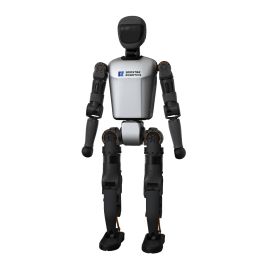
Booster T1 Basic Humanoid Robot
- Humanoid standing about 1.18 meters tall with 23 degrees of freedom.
- Platform aimed at research and development.
- Programming interfaces, ROS 2 compatibility and simulation tools.
- Designed for exploring locomotion, balance and whole-body control.
Note: It does not include the manipulation capabilities of higher versions with grippers or dexterous hands. It is also not ready to perform every professional task without additional programming.
View Booster T1 Basic Humanoid Robot →5. Do you want to study how a robot with humanoid arms manipulates objects?
What you need: a manipulation platform with a stable base.
A humanoid does not always need legs. To study how a robot reaches, grasps and moves objects, a torso-and-arms platform can avoid some of the complexity of maintaining balance while walking.
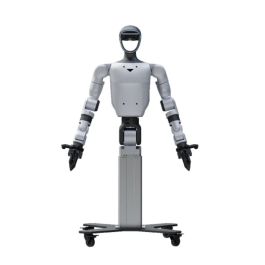
Unitree G1-D Wheeled Humanoid Robot
- Dual-arm humanoid platform with seven degrees of freedom per arm.
- Gripper and robotic-hand options.
- Aimed at manipulation, perception and data-collection experiments.
- Available in fixed-base or mobile configurations, depending on the version.
Note: The linked Standard A U1 version uses a fixed base. Do not confuse it with G1-D configurations that include a wheeled mobile base. Verify the exact model before buying.
View Unitree G1-D Wheeled Humanoid Robot →6. Do you want to explore a full-size humanoid?
What you need: an advanced platform for studying full-body movement.
A human-scale robot lets you study problems that do not emerge in the same way on smaller models: mass distribution, joint forces, stability and safety.

Unitree H2 Humanoid Robot
- About 1.82 meters tall and 70 kg in weight.
- Body with 31 degrees of freedom.
- Joints designed for complex dynamic movements.
- Family of configurations aimed at advanced research.
Note: The basic H2 does not include every development and manipulation capability of the EDU or H2 Plus versions. Check which software, hands and accessories the configuration includes.
View Unitree H2 Humanoid Robot →7. Are you interested in a human-looking humanoid for social interaction?
What you need: a social robot with expressions and conversational interaction.
Not every humanoid is built to carry objects or compete. Some aim to reproduce gestures, expressions and conversations to explore new forms of interaction with people.

UBTECH U1 PRO
- Hyperrealistic-looking humanoid.
- Facial expressions and articulated movements.
- AI-enabled conversation and interaction functions.
- Aimed at companionship and social interaction rather than industrial automation.
Note: Recognizing expressions or holding conversations is not the same as understanding human emotions. It should not be confused with a domestic assistant able to cook, clean or work autonomously. Check its delivery terms and regional support.
View UBTECH U1 PRO →Before you buy, remember these four things
- Movement does not mean autonomy. A robot can walk or dance by following instructions without knowing how to solve problems on its own.
- Programmable does not mean ready to work. Check the SDK, sensors, development tools and included capabilities.
- Size changes the requirements. A 70 kg humanoid requires space, safety procedures and people prepared to operate it.
- Configuration matters greatly. Hands, cameras, computers, licenses and support can vary even among versions of the same robot.
Our recommendation
Do not buy a humanoid simply because it looks impressive. First decide what you want to develop or explore. To learn programming and motion, a small humanoid can offer projects for months. If you want to study locomotion, competitions or manipulation, look for platforms that let you modify and control their behavior.
If your goal is to acquire a humanoid to work in a company or interact with people, ask for demonstrations of the specific task, information about human intervention, safety and technical support. Humanoid robots are advancing quickly, but there is still a huge difference between a spectacular demonstration and a machine able to work every day. The question is not how much it resembles a person. It is what it can actually do and what you need to teach it.
Some links in this guide are affiliate links. Bot Army Shop may receive a commission at no extra cost to you.