TCL AiMe in 2026: from modular concept to AI robot for children
TCL’s AiMe has moved from a modular CES concept to an AI companion offered in China. The important question is not only what it can say or see, but whether a family robot can support curiosity without pretending to replace human relationships.
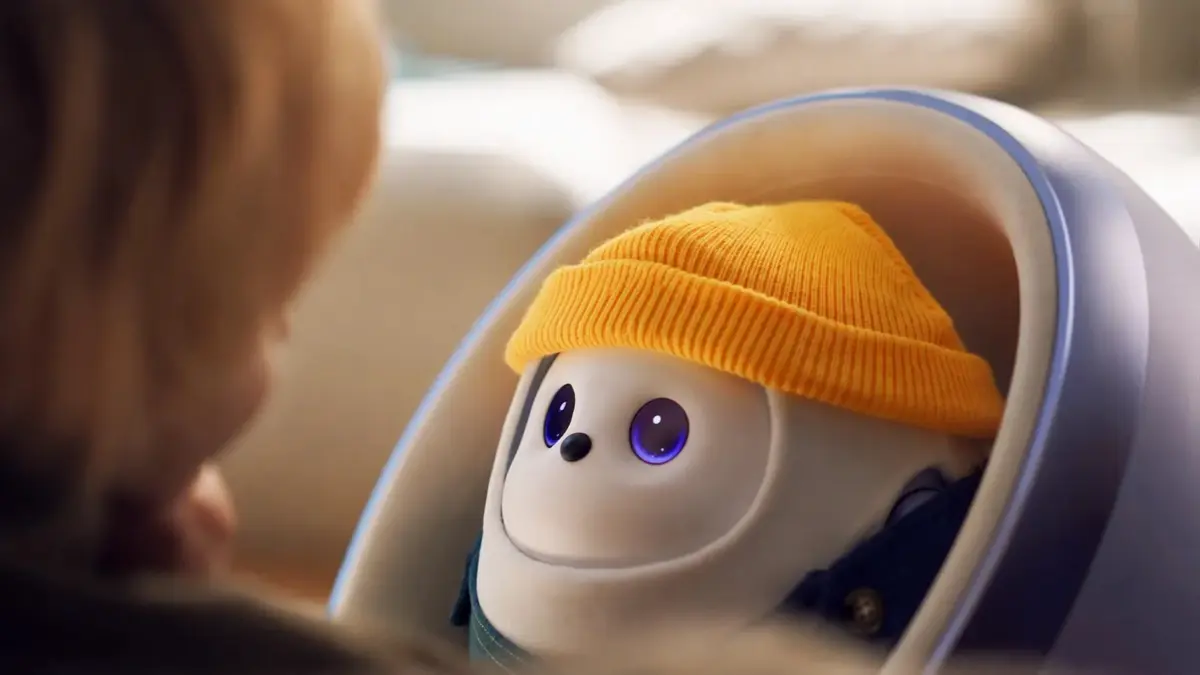
TCL introduced AiMe at CES 2025 as a small expressive robot with a round body, prominent eyes and a modular design. In 2026, the company presented a newer version and announced local preorders in China.
That is notable because TCL brings consumer-electronics design, manufacturing and distribution experience to a category often led by small companies. It does not, by itself, prove that a companion robot will be useful after its initial novelty wears off.
TCL AiMe: key information
| Feature | Announced information |
|---|---|
| Company | TCL |
| First public concept | CES 2025 |
| New generation | Presented in China in 2026 |
| Intended role | Family and child-oriented companion |
| Interaction | Voice, visual input, movement and AI features |
| Design | Expressive body with a mobile modular base |
| China availability | Local preorder announced |
| International price | Not confirmed |
| Global schedule | Not announced |
| Current stage | Early commercial rollout |
Information is based on TCL materials and public coverage. Product features, support and availability may differ by market.
What changed from 2025 to 2026?
The 2025 concept emphasized personality and modularity. TCL’s newer presentation shifts the project closer to a child-focused consumer product.
That change matters because a product for children must answer more than design questions. It needs clear age guidance, durable controls, privacy choices and support that families can understand. A visually appealing concept can suggest possible uses; only a commercial version can show what is actually included.
What can AiMe do?
TCL describes multimodal interaction: the robot can combine voice, visual information and expressive movement. It is intended to take part in stories, activities and conversations rather than perform household labor.
These claims should be read carefully. Processing voice and images does not prove the system always understands a child’s intention, gives reliable educational guidance or knows when not to answer. The real experience will depend on noisy rooms, content controls, language support and how easy it is to turn features off.
AI, mobility and limits
AiMe’s design can create the impression of an independent little character. That is part of its appeal, but also a reason to distinguish animation from understanding.
A companion robot may react to a touch, move toward a person or generate a response. None of those abilities automatically establish emotional comprehension, safe advice or free navigation through every home. Specific mobility, connectivity and AI features must be checked in the product listing for the relevant country.
Can it improve children’s learning?
An engaging device can prompt stories, questions or family activities. Those are potential benefits, not independently established educational outcomes.
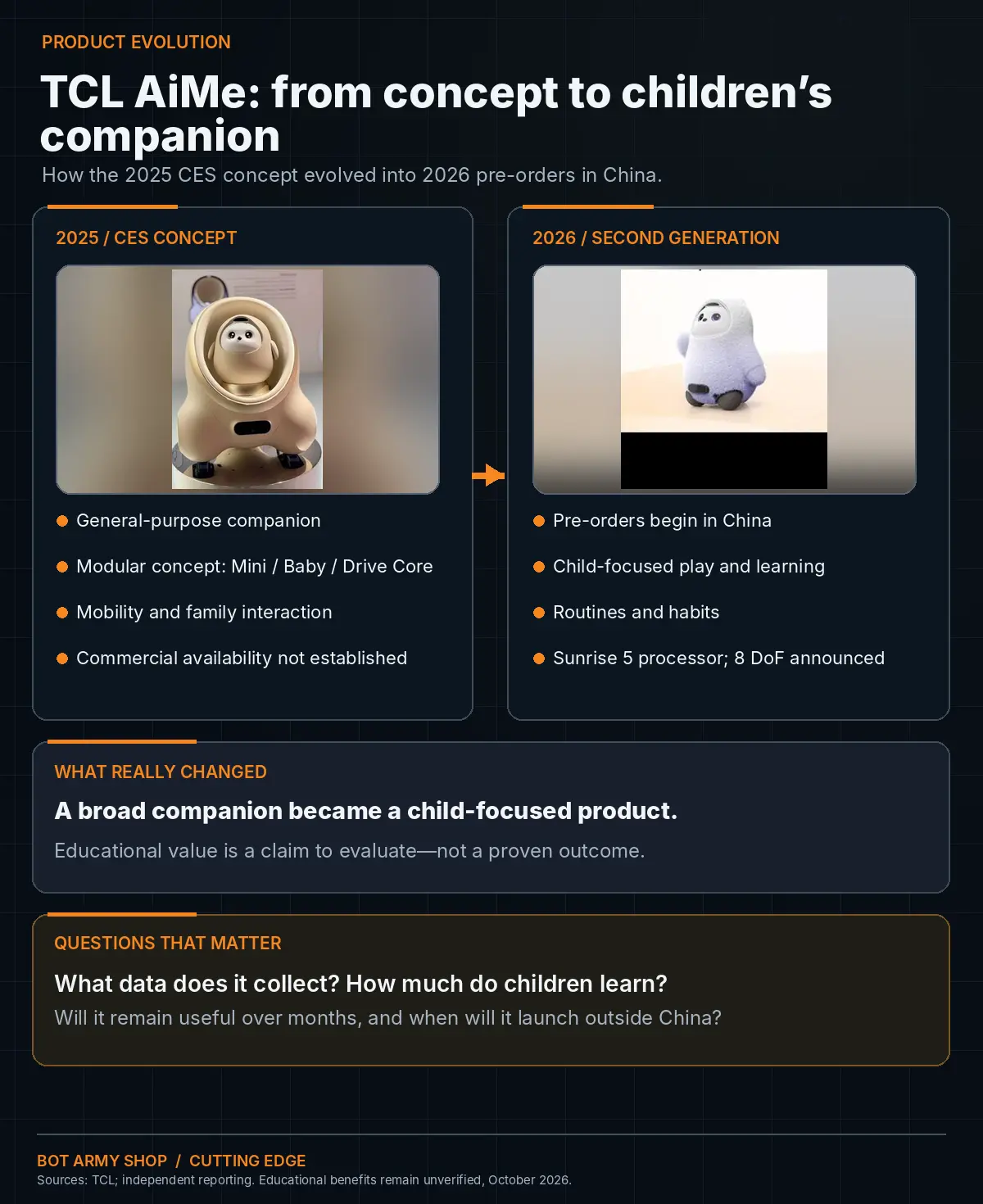
The useful standard is simple: does the robot help a child explore something, create something or share an activity away from the screen? A responsible product should make its limitations clear and give parents practical control over conversation, data and access.

Privacy and emotional attachment
A robot designed for children can use cameras, microphones and language models in particularly sensitive settings. Families should be able to determine what is recorded, which services process data, how long it is kept and how parental controls work.
There is also an emotional question. An expressive machine can feel friend-like, especially to a young child. That makes clear framing important: AiMe can be a tool or a character, but not a substitute for an adult’s judgment or care.
Price and availability
TCL announced an August 2026 preorder in China and also showed AiMe at IFA 2026. Those milestones do not establish international availability, a global price or identical features in every version.
A local product page will be needed to confirm language support, accessories, subscriptions, service and privacy terms. Until then, AiMe should be treated as an early rollout rather than a globally established product.
Galileo-9’s reading
The interesting part of AiMe is not that it has expressive eyes. It is that a major consumer brand is testing whether companion robotics can become a supported household category.
Success will depend on the quieter details: reliable software, transparent data practices, long-term support and whether families still find value after the first week of novelty.
Sources and methodology
This article uses TCL documentation, public coverage of CES and information about the 2026 China presentation. It is not a hands-on test of AiMe or an independent educational or psychological evaluation.
Bot Army Shop Editorial Team · AI-assisted research and human editorial supervision.
- TCL Design. AiMe concept and modular design story.
- TCL China. 2026 AiMe announcement.
- TCL. IFA 2026 presentation.
Editorial review: October 11, 2026.